
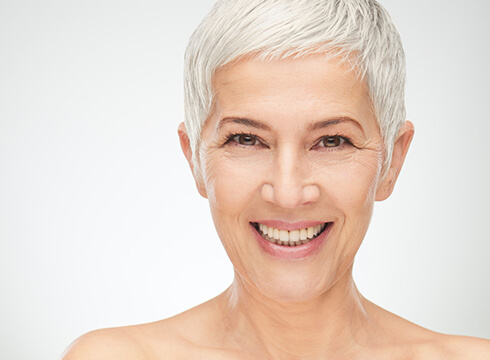
It is becoming increasingly common for men and women of all ages to want to achieve a healthier, more attractive or rejuvenated look to reflect the way they feel inside. Understanding the changes that occur in the different layers of the face over time, can help you better understand what you see in the mirror and appreciate how the various procedures available to help improve those concerns.
This will briefly explain the aging face and the changes you can expect to see in each decade from your 20’s through to your 50’s.
The Aging Face
Sooner or later we all start to notice the effects of time showing on our face.
This is due to the natural aging process and external factors such as, sun exposure, gravity, smoking, stress, facial expressions, free radical damage and sleeping positions. These effects result in structural changes in each of the 4 primary levels:
Skin:
- Changes in genetic material
- Reduced cell renewal
- Slower desquamation (skins natural exfoliation process)
- Impaired barrier function and moisture loss
- Thinner fragile skin
- Loss of elasticity
- Pigmentation and Vascular changes
Volume:
- Loss of collagen, elastin & ground substance
- Fat loss
- Gravitational effects on fat and soft tissue
Muscle:
- Loss of strength and tone
- Reduced support for overlying soft tissue
Bone:
- Bone loss
- Structural changes
These structural changes result in the following visible signs of aging, which thankfully, most can be improved without surgery or downtime. Always remember that prevention is better than treatment but if you do have any visible signs of aging don’t let it continue to get worse until more drastic measures like surgery are required.

- Thin, transparent & fragile skin
- Uneven pigmentation
- Actinic keratosis (sun spots)
- Lines & wrinkles
- Dark circles
- Vascular changes
- Benign skin lesions
- Dryness & flaking
- Rough uneven texture
- Flattened cheeks
- Enlarged pores
- Sagging skin
- Cancerous lesions
- Corners of the mouth downturn
- Bags under eyes
- Loss of definition in jawline
- Eyelashes & brows are thinner, shorter & sparse

Facial changes through the decades
Intrinsic aging is also known as the natural aging process that normally begins in our mid-20s and is progressive. Within the skin, collagen production slows, and elastin, the substance giving the skin its elastic properties, has a bit less spring. Dead skin cells don’t shed as fast and there is a decrease in new skin cells production. While these changes usually begin in our 20s, the signs of intrinsic aging are typically not visible for decades.
Facial changes in your 20s:
In your early 20s, your skin and features reflect your youth. Smooth contours, glowing skin, full cheeks and lips are characteristic of a young face. Make the most of these features while they’re at their best and remember that how well you take care of your skin now will affect how it looks later on in life.
In your mid to late 20s, you may begin to see the very early signs of fine lines caused by repeated muscle movement. Your skin may start to feel drier or show signs of sun damage or you may experience hormonal changes resulting in acne.
To maintain your youthful complexion and address any skin concerns ensure you use active skincare daily that has been recommended for your individual needs, including a quality broad spectrum SPF 30+ sunscreen every day to minimise damage to your skin. Monthly treatments such as Glycolic/Lactic Acid Peels, Microdermabrasion and LED Light Therapy are perfect to help keep your skin looking and functioning at its best.
Facial changes in your 30’s:
Through your 30s, you may start to notice a few broken capillaries, larger pores and your skin is a little less supple. You may also start to notice a loss of volume including the cheeks, which may occur even if your weight remains stable. The constant pull of gravity may also begin to show, such as drooping of the brow and cheeks. The lines that form when you smile or frown might now be constantly apparent even when your face is relaxed. And that smooth, youthful glow you had in your 20s might be starting to fade. If you spent a lot of time in the sun without adequate protection, the damage you experienced will become more evident, and may include the appearance of sun spots, redness, pigmentation and pre-cancerous lesions.
To improve your skins appearance and health to prevent premature aging, ensure you use good quality active skincare daily that has been recommended for your individual needs, including a broad spectrum SPF 30+ sunscreen every day to minimise further damage. Monthly treatments to stimulate collagen production and resurface the skin will help to firm, plump and smooth lines, wrinkles and surface texture, as well as helping to tighten pores. Specific treatments may also be recommended to treat pigmentation or vascular changes.
Your Dermal Therapist may suggest various combinations according to your individual needs but may include our VIVACE Microneedling & Radiofrequency, HIFU Non-Surgical Tightening & Firming, Microdermabrasion, IPL Photo Rejuvenation, Skin Needling, Glycolic/Lactic Acid Peels, TCA Peels
Facial changes in your 40s:
In your 40s you’re bound to start noticing signs of your life experiences on your face. Laughter and expression lines become more obvious, combined with the loss of volume that has been keeping your upper and mid face smooth and un-lined.
The constant pull of gravity may also begin to show causing the cheeks and eyelids to droop, jowls to form and the tip of the nose to drop. You may also notice continuing changes in your skin such as broken capillaries, pigmentation, larger pores and a dry rough texture and your lashes and brows may not be quite as dense, long or thick as what they used to be.
To improve the signs of aging and stay younger looking for longer it is vital you’re using good quality active skincare (including a high quality and concentrated form of Vitamin A) to address any specific skin concerns, speed up cell renewal and repair minor DNA changes improving the overall quality and health of the skin. You should also be using a broad spectrum SPF 30+ sunscreen every day to help minimise additional sun damage.
Monthly treatments should continue to be a part of your maintenance program to stimulate collagen production deeper in the skin using our Non-Surgical Face Lift, Skin Needling or VIVACE Microneedling & RF for best results.
You may also require the additional help of cosmetic injections such as wrinkle relaxers and dermal fillers or some cosmetic surgery procedures may also be considered for advanced signs aging.
Facial changes in your 50s:
If you’ve been religious with your active skincare, sunscreen and maintenance treatments, you will reap the benefits in your 50s. However, it’s important to consider the changes that are occurring deeper in the skin including the loss of dermal volume (collagen, hyaluronic acid and fat), muscles and even bones. In your 50s, wrinkles caused by muscle movement deepen, and you may notice you have less plumpness and volume in your mid-face and cheek areas. Your lower face and jawline may be less defined and you may see lines developing around your mouth, chin and cheeks. Your upper face may be experiencing drooping of the eyebrows and eyelids, lines on the forehead, between the brows and around the eyes.
If you have enjoyed your life in the sun without adequate protection, you will most like have advanced signs of sun damage such as brown spots, generalised redness or red spots, rough, dry texture, benign, precancerous or possibly even skin cancers.
To continue to look great for your age and encourage a healthy youthful looking skin, keep up with your active skin care and sunscreen regime and check with your Dermal Therapist that you’re using the most active formulations for anti-aging.
Continue your monthly treatments to help your skin stay smooth, plump and firm in addition to cosmetic injections when desired. If you see any suspicious lesions, ensure you see a skin cancer specialist for evaluation and get regular full body checks. If you’re considering cosmetic surgery, ensure you do your research about providers and procedures, though we may be able to point you in the right direction.
To find out what skin care and treatments are best for your individual needs, call us on 9300 3663 to make an appointment with one of our Dermal Therapists for a comprehensive consultation.

